Showing posts with label Demo Games. Show all posts

Saturday, 13 June 2026

Best in Show at Broadside 2026

The Posties Rejects were back at the Broadside Wargames Show today, hosted by the Milton Hundreds Wargaming Club. Broadside has become a regular fixture in our calendar and we make a point of putting on a participation game every year. We all take turns bringing games to the show, and this year it was Ray and I who had the pleasure of collaborating on a project that has occupied a great deal of our hobby time over the last couple of years.

Today we finally got our 28mm Retreat from Moscow collection onto the table in all its wintery glory. Even better, at the end of the day we were absolutely delighted to be awarded Best in Show. Needless to say, we're both over the moon.

The Battle of Berezina, November 1812

Our game recreated part of the Battle of Berezina, fought between 26 and 29 November 1812 during the catastrophic retreat of Napoleon's Grande Armée from Russia.

To understand why Berezina became such a desperate struggle, we need to go back to June 1812 when Napoleon launched his invasion of Russia. Around 600,000 men crossed the frontier in what remains one of the largest military operations in history. The intention was to force Russia back into compliance with the Continental System and strengthen French dominance across Europe.

The Russians, however, refused to fight the decisive battle Napoleon wanted. Instead, they retreated deeper into their vast territory, destroying food, supplies and shelter as they went. The strategy forced the French to advance ever further from their supply lines while finding less and less to live on.

The two armies finally met at Borodino on 7 September. The battle was a French tactical victory, but it came at an enormous cost, with roughly 70,000 casualties suffered between the two sides in a single day. More importantly, the Russian army survived intact and withdrew in good order.

A week later Napoleon entered Moscow expecting Tsar Alexander I to seek terms. Instead, much of the city was destroyed by fire and the Tsar refused to negotiate. After waiting more than a month in the ruins, Napoleon finally ordered a retreat. What followed was one of history's great military disasters.

Forced back along the same devastated route his army had already stripped bare, Napoleon's troops faced starvation, disease, exhaustion, relentless Cossack attacks and an unusually early Russian winter. By mid-November the remnants of the Grande Armée had reached Smolensk only to discover that its supplies were already exhausted. Worse still, several Russian armies were converging to cut off their escape.

The Crossing of the Berezina

By late November Napoleon's army found itself trapped against the Berezina River. The main bridge at Borisov had been seized by Russian forces under Admiral Pavel Chichagov, while other Russian armies closed in from different directions. The situation looked hopeless.

Napoleon responded with one of the most impressive deception operations of his career, convincing the Russians that he intended to cross further south. Meanwhile, French engineers identified a crossing point near the village of Studienka.

Under the leadership of General Jean-Baptiste Eblé, several hundred Dutch pontonniers entered the freezing, ice-filled water and constructed two temporary bridges. Working chest-deep in near-impossible conditions, they made the crossing possible at the cost of their own lives. Most would die from exposure and hypothermia in the days that followed. As French troops crossed the river, Russian forces attacked from both sides.

On the western bank, Marshals Oudinot and Ney fought desperately to keep the escape route open. On the eastern bank, Marshal Victor's IX Corps formed a rearguard and held off the advancing Russians while tens of thousands of stragglers, wounded soldiers and civilians struggled towards the bridges. It was this desperate eastern-bank action that we chose to recreate at Broadside.

The fighting was brutal. Artillery pounded the French positions while Victor's outnumbered troops fought to buy time for those attempting to escape. By the morning of 29 November, Napoleon ordered the bridges destroyed to prevent pursuit. Thousands who had failed to cross were abandoned to their fate.

Although Napoleon escaped, the cost was horrific. Between 20,000 and 25,000 French combat troops were lost, along with perhaps another 20,000 stragglers who were killed, captured or drowned. Russian losses were also severe, but they had failed to achieve their ultimate objective of trapping Napoleon himself.

The crossing saved the Emperor and his surviving officer corps, but the Grande Armée was effectively destroyed. Of the approximately 600,000 men who had marched into Russia in June, fewer than 40,000 effective soldiers emerged from the campaign six months later. It remains one of the greatest military catastrophes in history.

The Game

For the game itself we used our collection of 28mm Napoleonic miniatures to recreate the desperate struggle on the eastern bank of the Berezina.


The figures are primarily from Perry Miniatures and Front Rank Miniatures, supplemented by miniatures from Wargames Foundry, North Star, Essex and Murawski Miniatures. The ruined buildings are from Charlie Foxtrot Models, now part of the Blotz range.

One of the centrepieces of the table was the Berezina itself. Special thanks must go to Last Valley, who produced the river sections and bridge to our specifications and helped bring the battlefield to life.

Rules-wise, we used a large-battle adaptation of Sharp Practice. Rather than activating individual Groups, we activated entire Brigades, allowing the game to flow more smoothly while still retaining the character and decision-making that makes Sharp Practice such an enjoyable set of rules.


The result was exactly what we had hoped for: a visually impressive table, a game that played well throughout the day, and plenty of opportunities to talk to visitors about both the history and the hobby.


A Wonderful End to the Day

Putting on a display game always involves a considerable investment of time and effort. There are miniatures to paint, terrain to build, research to undertake, rules to adapt and countless practical details to organise before a single dice is rolled. That's part of the fun, of course, but it makes recognition from fellow gamers especially rewarding. So to be awarded Best in Show was a fantastic surprise and a wonderful way to end the day.

Many thanks to the Milton Hundreds Wargaming Club for hosting another excellent Broadside show, to everyone who stopped by the table to chat, ask questions or roll a few dice, and to all the traders, clubs and participants who helped make the event such an enjoyable day. As for the Rejects, we're already discussing what we might bring next year. Though for the moment, we're still enjoying the glow of a hard-earned win.


Monday, 23 February 2026

Cavalier 2026 Show Report

The 2026 Cavalier Wargames Show in Tonbridge once again proved why it remains one of the most respected and enduring regional tabletop wargaming events in the UK. Held annually at the Angel Centre and hosted by the Tunbridge Wells Wargames Society, Cavalier has become a true “season opener” for many gamers across the South East, myself included.


After the long winter stretch between Warfare and February, Cavalier marks that moment when the show calendar properly comes back to life. It’s a chance to reconnect with fellow hobbyists, meet subscribers and friends, browse traders, and soak in some of the best demonstration and participation games the region has to offer. While it may not be as vast as some of the larger national conventions, Cavalier consistently delivers a high standard of presentation and organisation, making it a favourite among historical wargamers, miniature painters, and tabletop gaming enthusiasts alike.

Sunday, 20 July 2025

When is it too soon to wargame a conflict?

Is There Such a Thing as "Too Soon" in Wargaming? In this video, I revisit a question from the Joy of Six 2025 panel: When is it too soon to wargame a historical or current conflict? It’s a topic that sits at the crossroads of ethics, storytelling, and historical accuracy in our hobby. From civilian casualties and sensitive subject matter to the level of public visibility, I explore why context and audience matter more than ever in how we represent the past on the tabletop.


Whether you see wargaming as entertainment, education, or a bit of both, we can’t ignore the tough questions. Should we include war crimes? What about modern conflicts still in the headlines? Is historical wargaming at risk of becoming too sanitised?

I also reflect on my experience at the Joy of Six show, including a surprise appearance on the discussion panel alongside Peter Berry, Per Broden, and Heretical Wargaming.

Join me for a thoughtful dive into how we balance respect, realism, and storytelling—and let me know where you draw the line.

Sunday, 22 June 2025

Is this HURTING Historical Wargaming?

Is this HURTING Historical Wargaming? In this video, we dive into a hot topic in the tabletop wargaming community: Do spectacular demo games at conventions and shows actually put off new players? Or are they a vital way to inspire and grow the hobby? This episode explores both sides of the debate with humour, honesty, and a deep love for the hobby.


Whether you're into historical wargaming, fantasy wargames, or sci-fi tabletop battles, if you've ever admired a jaw-dropping demo game at Salute, Partizan, or your local show, this discussion is for you. Are we unintentionally intimidating newcomers with massive armies, custom terrain, and “model railway” levels of spectacle? Or are we showing off the very best of what tabletop wargaming can be?

I share three key reasons why these games might discourage new players, and five strong reasons why I think they inspire and motivate both veterans and beginners alike. Plus, I  offer two essential tips for clubs and groups running demo games to make them more welcoming and effective.

Join the conversation in the comments and let us know what YOU think about spectacle in wargaming!

Monday, 16 June 2025

The Battle of Rivoli 1797 - Posties Rejects demo game at Broadside 2025

Yesterday I posted my photo review of the Broadside Wargames Show, which took place in Gillingham, Kent over the weekend. Posties Rejects were there in force to put on our annual demo game at the show. This year, we presented the Battle of Rivoli, 1797. I say 'we' but in actual fact it was entirely the work of Richard, a fellow member of Postie’s Rejects. He painted all the figures, built the terrain, designed the scenario and acted as umpire for an epic clash that wasn’t just a visual treat but a historically rich and tactically engaging experience for the players and onlookers alike. Check out my short video of the game for a close-up look at the miniatures and all of Richard's hard work. 


The battle he recreated, the Battle of Rivoli, was fought on January 14–15, 1797, during Napoleon Bonaparte’s first Italian campaign in the War of the First Coalition. Near the village of Rivoli Veronese in northern Italy, Napoleon’s Army of Italy faced a significant Austrian force under the command of Feldzeugmeister Jozsef Alvinczi. The Austrians were attempting to break the siege of Mantua, which had been under French pressure for months. Their plan involved a multi-pronged attack through the mountainous terrain north of Verona, with the hope of catching Napoleon’s forces by surprise and forcing them to retreat. However, what followed was one of Napoleon’s most famous early victories.


The French, numbering approximately 22,000 troops, occupied high ground near the Rivoli Plateau. Despite being outnumbered, Napoleon's mastery of terrain, timing, and tactical concentration enabled his smaller force to hold firm and repel around 28,000–30,000 Austrian troops. The Austrians attacked in multiple columns, hoping to converge on the French position, but coordination issues and the rugged terrain made this difficult. Napoleon reacted quickly, reinforcing critical points of the line and using his artillery to great effect. By the second day of the battle, French reinforcements under Generals Joubert and Masséna arrived, overwhelming the fragmented Austrian columns and forcing a general retreat. Austrian casualties numbered over 14,000, while the French lost around 5,000. The victory at Rivoli secured Napoleon’s control of northern Italy and led to the surrender of Mantua shortly afterwards, effectively ending Austria’s hopes of reclaiming the region.


For the demo game, Richard chose to represent the armies and battlefield in 6mm using laser-cut MDF miniatures from Commission Figurines. These figures, painted entirely by Richard himself, allowed for sweeping, realistic unit formations and gave the game an epic scale that larger figures often struggle to capture. The entire battlefield, terrain, and all the models on the table were part of Richard’s personal collection. He not only painted every figure and built the terrain from scratch, but also designed the scenario to reflect the key historical dynamics of the real battle. He also acted as umpire during several test games in the lead-up to Broadside, refining the balance and ensuring historical accuracy, and also ran the game on the day with help from other members of the Rejects.


The rules used for this demo were Volley & Bayonet, a well-established system ideal for large-scale battles like Rivoli. We have played these rules many times and have found them ideal for recreating large Napoleonic battles. The 6mm scale figures were especially effective for conveying the scope of the battle. With large brigades represented by compact but detailed bases, visitors to the show were able to appreciate the overall flow of the battle in a way that just wouldn't have been possible in larger scales. The terrain included rolling ridgelines, the Adige River valley, and the key plateau where the French made their stand. Everything was constructed and painted to a high standard, with Richard’s craftsmanship receiving frequent praise from passers-by. And many attendees commented on how effective 6mm MDF miniatures can be for portraying big battles when painted and based well, as these were. 

The game was a gripping and dynamic experience for those that took part. I spent most of the game circling the table and speaking to visitors ('working' the crowd😆) while several members of the group focused on the ebb and flow of the game.  In the version we played at Broadside, the Austrians once again struggled to coordinate their attacks effectively, though they managed a strong push on one flank before French reinforcements and the uncanny dice rolling skills of Chris dashed their hopes. 

Sunday, 9 March 2025

From Good to Great

Are you ready to take your miniature wargaming experience to the next level? In this video, we reveal one simple yet powerful tip that can transform your wargame from good to great! Whether you're a veteran historical wargamer or just getting into the hobby, preparation is the key to better battles, smoother gameplay, and more immersive experiences.


🔥 Subscribe for more hobby tips, wargaming discussions, and hobby insights!

#MiniatureWargaming #TabletopWargaming #WargameStrategy #HistoricalWargaming #Warhammer40K #BoltAction #FlamesOfWar #MiniaturePainting #TabletopGaming #WargameTips

Friday, 7 June 2024

Broadside Wargames Show - Meet the Rejects

Posties Rejects are running a demo game at the Broadside Wargames Show in Gillingham this Saturday, 8th June 2024. We have been running games at this event for many years and this time it's Ray's turn to put in a game. We have had a couple of practice games recently and a very nice-looking game for visitors to see. I don't want to give away too much at this point, but Ray has put together a lovely-looking game which tells the story of what is often called the only successful slave revolt in history. Here's a sneak peak, but check out this post on Ray's Blog for more details. 


If you're in the Medway area next Saturday, or within driving distance, please pop along to this great little show and come and say hello. 


Sunday, 12 November 2023

Warfare 2023 Show Review

The Warfare 2023 wargames show took place this weekend and Posties Rejects drove down to Farnborough to enjoy the show. As always we shot a load of pictures, talked ourselves hoarse and spent loads of money. A brilliant day was had by all concerned. 

Monday, 23 October 2023

What is the point of Demo games: A personal perspective

What is the point of a demo game at a show? My personal view is that its a form of hobby outreach, encouraging non-historical wargamers and non-wargamers alike to give our wonderful hobby a try. So it should come as no surprise that one of my personal bugbears is the unlabelled demo game. This is a subject I have discussed many times (so I apologise if you've followed my channel or blog long enough to have heard this before), and it is a phenomenon that is thankfully becoming rarer and rarer. But its not entirely gone away.

Tuesday, 4 July 2023

Dutch Raid on the Medway: Mad for War at Rapture

Last year Posties Rejects were blown away by Barry Hilton’s "Raid on the Medway" game at Partizan so we convinced him to bring it down to Kent to run the game in Chatham Docks, the target of the Dutch raid back in 1667. The Rapture Gaming Festival stretches across the whole of the 80-acre site with computer games and wargaming rubbing shoulders with boardgames and RPGs, reenactors, and cosplay. 


The Raid on the Medway, during the Second Anglo-Dutch War saw the Dutch fleet, under the command of van Ghent and de Ruyter, battle and burn their way up the river towards Chatham Dockyard in Kent. All that stood in their way were a handful of English ships, a chain barrier at Gillingham, and the fortress of Upnor Castle.

The Dutch engaged fortifications with cannon fire, burned or captured three capital ships and ten more ships of the line, and captured and towed away the flagship of the English fleet, the Royal Charles. 

Posties Rejects played three games across the two days of the Rapture Gaming Festival inside Chatham Docks. The question now is, did we replicate history or did the British successfully defend the docks from the attack? 

For two excellent written accounts and many more photos from an excellent weekend's gaming, please take a look at Rays' Blog Don't Throw a 1, and Richard's Blog, My Wargaming Habit

Monday, 12 June 2023

Broadside 2023: Posties Rejects Smugglers on the Kent coast

The Broadside Wargames Show at Gillingham is our 'local' show and Posties Rejects always run a demo game at this event. For 2023 we put on a fictitious clash between Government troops and smugglers somewhere on the Kent coast. A few days ago I posted a video of the show featuring our game and a short slideshow of the other games at Broadside. The quality of the games was very high this year and despite the rising heat during the day, everyone seemed to be having a great time. We were busy with visitors all day long and had a really excellent day. 


Skirmish at Francis Bay - June 10th 1784

Smugglers on the Kentish Coast by Posties Rejects

“Smuggler.—A wretch who, in defiance of the laws, imports or exports goods without payment of the customs.” Dr. Johnson


Kent is a perfect location for smugglers. Close to France, with good transport links to London and with gently sloping beaches making landing goods easy. Smuggling is as old as taxation itself but in the 18th century high import taxes on goods such as silks, brandy, tobacco, and tea were highly prized by so-called ‘free traders’. And with plenty of wealthy customers to service, there was a lot of money to be made for those that could avoid being caught.

One group of smugglers that would have been well-known in the local area was the North Kent Gang. They operated in areas like Chalk, Gravesend, Reculver, and Ramsgate. During the 1780’s they brought their contraband ashore and stashed it in caves near Margate. Initially, trade was small, supplementing low incomes, but eventually the ‘business’ grew into what would now be called an organized crime network. Violence was soon being employed to ‘protect’ the business and clashes with law officers or revenue men were common. In Gravesend where our group meet, the Three Daws Pub is a famous smugglers' den, and at one time there were tunnels from the pub up into the town so that contraband could be moved without being seen.

The game portrayed today is a fictitious encounter, but may still have been an occurrence many times in reality, as the government tries to stop the smuggling operations. Our game is set on the South coast of Kent, hence the white cliffs. Various locals have gathered to await the arrival of their goods from France which unfortunately have arrived late due to a swell in the channel. So, as the French fishing vessel lands on the beach with barrels of Brandy, silks, and various other goods the sun is just starting to peak over the horizon. This is not good for the smugglers as they will have to unload all the goods in the early morning sunshine. A very dangerous time to be moving contraband indeed. A local snitch has decided to make some money on the side and has informed the local government forces of a landing in the area. As they search along the coast they spot a group of men and women behaving suspiciously close by on the cliff tops. Let the game commence!

Wednesday, 8 June 2022

French Foreign Legion: Beau Hunks - A Posties Rejects Demo Game

A few days ago I posted my pictures from the Broadside Wargames Show and revealed a few pictures of the Posties Rejects demo game, Beau Hunks. As promised here is a video telling the story of this game from conception to completion. I've also had a few requests for some background information and I have tried to share as much of it as I can here today. Where I have used material from other sites I have included links so you can go see the original documents. In addition, I have a bunch of material saved on Google Drive and I'll put links to shared files below. If these don't work and you want me to send anything (such as the QRS or the Beau Hunks rules) please let me know using the contact form on the right.


Hollywood meets History

Hollywood has given us many heroic and dramatic stories about the French Foreign Legion battling impossible odds in the Sahara. From several adaptions of P.C.Wrens novel Beau Geste to more comic depictions of the Legion such as Laurel and Hardy’s Beau Hunks, we have a romantic image of the steadfast and stoic Legionnaire. But as with all such stereotypes, the real story of the Légion étrangère and the French conquest of Algeria and Morocco is somewhat different. 

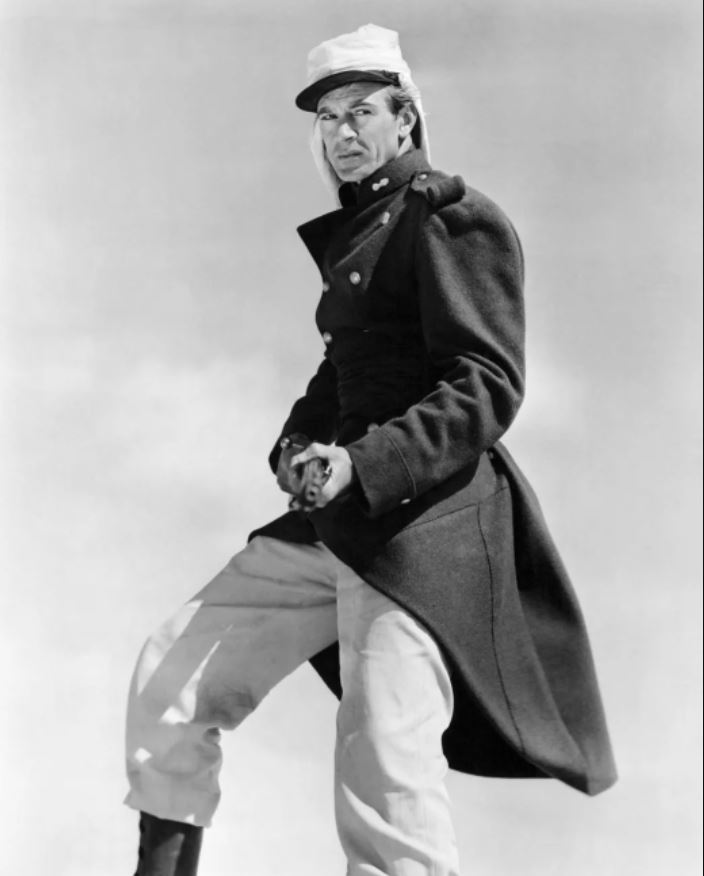
Fascination with the French Foreign Legion started long before Percival Christopher Wren’s novel Beau Geste was published in 1924. French troops in faraway exotic cities like Algiers & Oran to the almost semi-mythical Timbuktu could hardly fail to excite the imagination. But Wren's story of high adventure - set in pre-1914 French Algeria - took the romantic image to a new level, and it wasn’t long before the first screen adaption of his book was made in 1926 starring Ronald Coleman. Part of the success of the book was due to the detail of military life that Wren wove into his story, prompting unproven claims that he himself served in the Legion. A second adaptation of the story, starring Gary Cooper, was released in 1939 and this cemented the romantic image of the Foreign Legion in popular culture.  However, the real story of this period of French Colonial history is much more interesting. 

For much of the 19th Century, the government in Paris had been divided between liberals who saw no real need for expansion into North Africa and a conservative pro-colonization party that wanted land, no matter the cost. After the humiliation of the Franco-Prussian War, military adventurism in Europe was (for the time being at least) held in check and ambitious politicians and eager young officers looked outward for glory and career advancement opportunities. 

By 1871 much of northern Algeria had been pacified. The grazing and agricultural land of the ‘Tell’ had been confiscated and the Arab and Berber tribes had been displaced or subdued. But in the southern pre-Sahara, the situation was much more precarious. The notional border with the sovereign monarchy of Morocco was little more than an invisible line in the sand to the nomadic people of the region, and many on either side of that line owed religious allegiance to the Moroccan capital rather than to Algiers. As French authority began to be extended ever southward (following the progress of the Railroad) conflict was almost inevitable. In December 1899 French Irregulars occupied In-Salah, an oasis in the Touat group, and set in motion a chain of events that would make a wider conflict inevitable. 

French control of Algeria was maintained by the Armée d’Afrique. This consisted mostly of indigenous Arab or Berber volunteers as Mounted Spahis, Goumiers and Irregular infantry or Tirailleurs. These were supported by regiments of French settlers doing their military service (Zouaves and Chasseurs d'Afrique) and the non-French volunteers of the French Foreign Legion (Légion étrangère). It was not uncommon for officers in remote postings to overreact to minor incidents as a pretext for glory and the chance of promotion. And once these ‘French’ troops had taken a region, the government in Paris couldn’t abandon conquered territory without losing face. In this way, France acquired colonial conquests in a haphazard and unplanned fashion that has been described as an “orgy of military indiscipline”.

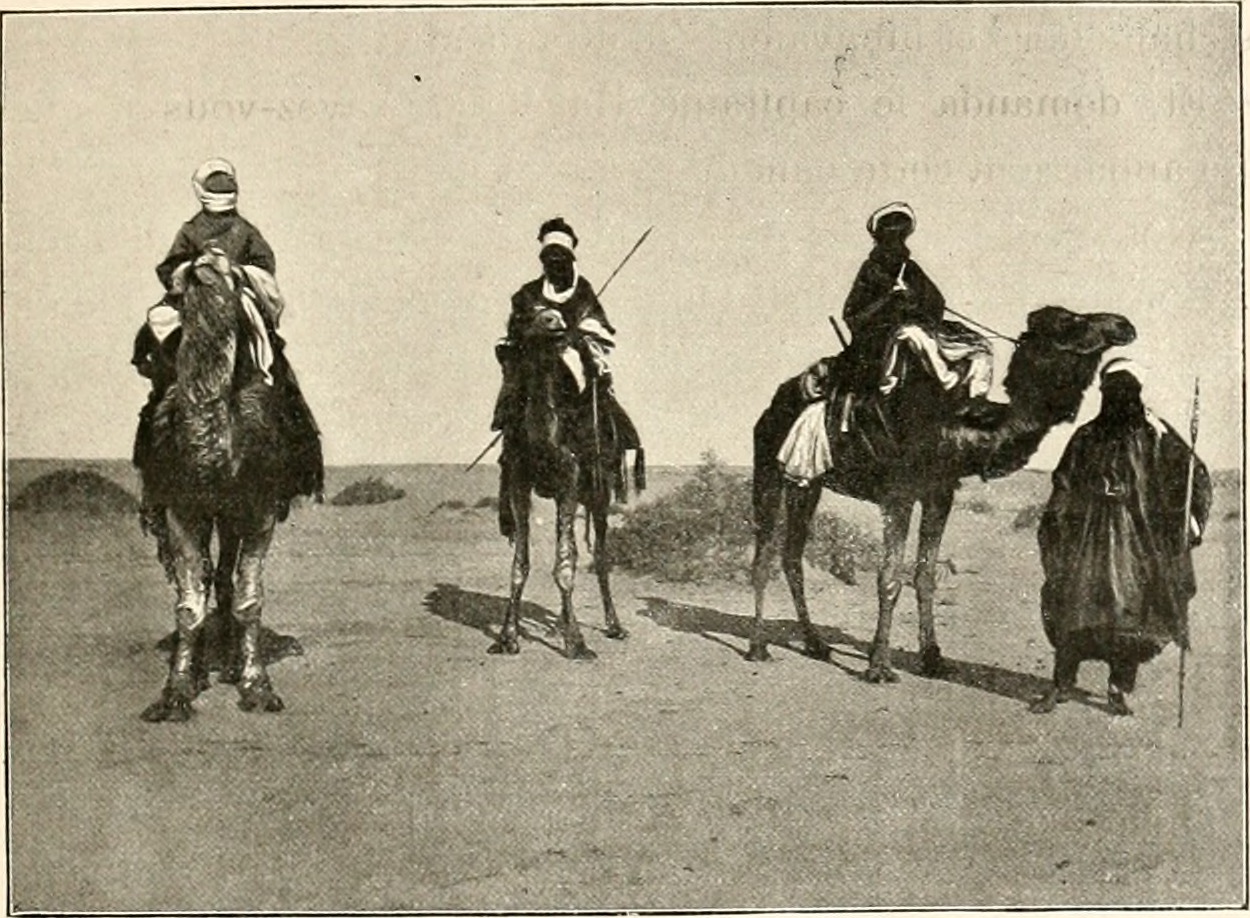
After the initial bloody occupation of the Touat, the tribes that had relied on trade with the region inevitably began to push back. The French occupiers had upset the delicate economics of the Sahara. To sustain their military forces the Armée d’Afrique was forced to transport vast amounts of supplies to a region that could barely support the local population, let alone their new European masters. This necessitated the acquisition of tens of thousands of camels, up to 40% of which died on the long treks south. For many Berbers, the majority of their personal wealth was invested in their camels. The requisitioning of animals lost to poor handling and often without adequate compensation, was a ruinous policy for many. In addition, the water of the Oasis chain could not sustain all the extra troops and camels, so the French sunk artesian wells which lowered the water table, simultaneously drying out the ground and creating stagnant disease-ridden pools on the surface. Little wonder that many of the indigenous population turned to raid as the only way to support their families. 

Through the first few years of the 20th Century, the classic ‘Beau Geste’ Legionnaire (white fatigues, blue-grey capote greatcoat, white covered and flapped Kėpi and armed with the Lebel 8mm repeater) saw regular action in the Touat and Sud-Oranais. Mostly this was dealing with hit and run raids but also on occasion, larger actions against large well organised Harkas several thousand strong. The Legion suffered its share of losses but a combination of mounted companies, and hard fighting pushed the Arabs and Berbers into exile or into submission. 

Between 1904-7 BrigGen Lyautey was given increasing freedom of action with French military posts pushed further and further westwards, even across the debatable border into Morocco. On two occasions he reported the creation of recon outposts (soon to become permanent forts) using unmapped local names to conceal how far west he had pushed. Thus he ignored the official policy of the Foreign Ministry in Paris by shaping policy on the ground. Meanwhile, the rail line moved ever further south and west eventually, reaching Bechar in 1905. This supplied operations in the region for many years to come and solidified French control of this previously contested land. 

With French incursions into Morocco, the Sultan began to face growing anti-french sentiment but was impotent to do anything about it. Corruption, lack of money and incompetence made the problem worse, eventually putting Europeans living in the major cities in danger. The French were eventually ‘forced’ to react, occupying Casablanca in 1907. This increased Arab anger both at the French and the Sultan, eventually resulting in a rival Sultan being proclaimed and a call for Jihad against the French. The Arabs were eventually defeated but by the end of 1908 the Sultan had abdicated, his wannabe usurper was dead, and Morocco was firmly on the road to becoming a French Protectorate.  


The Beau Hunks Rules:

Needless to say, Laurel & Hardy can't be killed and won't have any offensive capability in the game. They are here for purely comic value. They will move around the table in much the same way as other units, just at the end of the French turn, as a final move by the French player. 

The aim is for Laurel & Hardy to travel around the table visiting as many French Officers as possible (ie they have to end their move in base to base contact). Each officer can only be visited once during the game. Laurel & Hardy have a movement rate of 8", and can move through French units at no penalty. Berber units block movement, although the pair's presence on the table does not hinder movement for any unit (ie units of both sides can move across them) 


Whenever L&H end their movement in contact with an officer one of the players (or guest) around the table will draw 2 Chance Cards. There are three types of cards in the Chance deck:

  • Jeanie-Weenie Cards - Pictures of the unfaithful heartbreaker, each dedicated to a different lover! Laurel & Hardy will gain Victory Points for each Jennie-Weenie card collected and if they get enough to win the game Hardy decides she wasn’t worth it after all and they get out of the Foreign Legion. 
  • Slapstick Cards describe various ridiculous events caused by the bumbling heroes. Some of these cards are just comic descriptions, but a handful has a limited effect on a single unit or officer in the game. These cards will be evenly subdivided into French Cards and Berber Cards. The opposing player gets to decide which enemy unit is affected. Some cards are immediate, but for those which indicate an effect in the following action phase, place the card by the officer as a reminder and remove it from the table once the action has been taken. 
  • Event Cards - Rare but significant events that affect all the units on the table.


Laurel and Hardy will gain Victory Points for each Jeanie-Weenie card found and could, potentially be declared the winners of the game, leaving the players to contest second and third place!


Recommended Historical Reading List:

The Conquest of the Sahara
Douglas Porch (Farrar, Straus & Giroux 1984)

Our Friends Beneath the Sands
Martin Windrow (Weidenfeld & Nicolson 2010)

Uniforms of the French Foreign Legion
Martin Windrow (Blandford Press 1981)

The French Foreign Legion 1872-1914 Men-at-Arms Series No.461
Martin Windrow (Osprey 2010)

French Foreign Legionnaire 1890-1914 Warrior Series No.157
Martin Windrow (Osprey 2011)


Files for download: 

I have several files to share from my Google Drive, click the links to open them and you should be able to download a copy. There also links to external sites where I found other useful downloads. 


Saturday, 4 June 2022

Broadside Show Report 2022

A very quick video from today's Broadside Games Show. This is one of our favourite shows in the South East and the one where we usually run a demo game. Our game did rather well this year but I'll do a bigger video on that later in the week. This very short video features pictured of the games on display today. 

Tuesday, 10 May 2022

Beau Hunks: Hollywood meets History

I thought I would drop a sneak peek of a game the Rejects played over the weekend. For several years now we have run a Demonstration game at the Broadside Wargames Show (formerly in Sittingbourne, now in Gillingham, Kent). The last Broadside was in December 2021 and Richard ran an excellent French Revolution game using his own set of rules (see article and video HERE). Then the baton was passed to me to come up with a game for this year's Show, just six months later! Anyone that has followed this blog, or my YouTube Channel Miniature Adventures TV, will know that I have been working on French Foreign Legion in 15mm as my project for the show. 

So on Sunday, the Rejects gathered in the Shed-o-War for the first and only test playthrough of the battle I will be running as our demo game on the day. Five players gathered around the table as a Berber force attempted to ambush a Company of French Foreign Legionnaires as they returned to their lonely desert fort, somewhere in Algeria. The game itself is fictional but is based on the sort of raiding and patrolling that took place across the region in the first decade of the 20th Century.

Hollywood has given us many heroic and dramatic stories about the French Foreign Legion battling impossible odds in the Sahara. From several adaptions of P.C.Wrens novel Beau Geste to more comic depictions of the Legion such as Laurel and Hardies’ Beau Hunks, we have a romantic image of the steadfast and stoic Legionnaire. But as with all such stereotypes, the real story of the Légion étrangère and the French conquest of Algeria and Morocco is somewhat different.

For the Demo Game, I will actually be running two sets of rules (yes folks, two for the price of one!). The main battle uses The Men Who Would Be Kings as the base ruleset with a handful of minor rules tweaks for this game. Overlaying this is an entirely silly (and deliberately comic) card-driven game featuring the legendary comedy duo, Laurel and Hardy. They must move around the table looking for evidence of the infidelity of Ollie's unfaithful heartbreaker, Jeenie-Weenie. Whenever they encounter a French Officer, someone will draw two cards from the Beau Hunks inspired deck of chance cards. Some of these cards affect one side or the other, some just affect Laurel and Hardy and a few a more general Event cards. All feature comic scenes from the film Beau Hunks and their other films. If you happen to be passing our demo game at the show, expect to be roped in to draw the cards, sing one of the Duo's theme songs or do a little dance! 

It's not all silly, of course, I have also produced a short leaflet talking about the history of the period, comparing it to the glamorous and romantic image of the Legion portrayed by Hollywood. There will be a small display of pictures maps and other information for anyone wanting to research the period for themselves and there are even a few "test your knowledge panels" to see who knows their movie history and the history of the Legion. 

So, back to the practice game.... A big thank you to Ray (of Don't Thow a One fame) for sharing these pictures. I was so busy running things I didn't take any pictures at all! The session on Sunday was really useful because it gave me some much-needed practice umpiring a game with a rowdy (but good-natured) bunch of gamers. It also revealed several small mistakes with the QRS I was using and threw up a useful to-do list of minor changes I want to make for the Demo game itself. 

That's it for now, more will be revealed on the day. It goes without saying that we would love it if you could come along and see our efforts at Broadside on the 4th of June at the Medway Park Sports Centre, ME7 1HF. 

Sunday, 24 April 2022

Demo Game Box

Today's video is inspired by my recent call-to-arms and a flood of excellent subjects for future videos. Subscriber Mr__Blue asked, "What are the essential contents of the umpires demo box?" I've adapted this question sightly to look specifically at what you need to bring with you when running a Demo game, either at a club or a show. I've run several demo games at shows and am working on one right now for a show in June so I felt this was a subject I could speak with a little bit of authority on.


As usual, I ask readers/viewers for their views and experiences on this subject. So please leave your stories in the comments below or over on my channel Miniature Adventures